
If one of you is a hugger and the other is not, it is easy to start keeping score. A questionnaire study of heterosexual couples in the United States found that more affection overall was linked to stronger relationships, even when partners were not equally affectionate. The result is an association, and it is not a reason to pressure anyone for more.
The study was led by Kory Floyd, chair of the Department of Human Development at Washington State University, and was published in the journal Communication Studies. The university released a news item about it on 5 February 2026.
The researchers recruited 282 adults in the United States, made up of 141 heterosexual couples. Relationship length varied widely, from six months to 48 years. Each person filled in questionnaires, including ratings on a scale of 1 to 5 of items such as whether people who know them would describe them as affectionate. These answers placed each person on a continuum of affectionate communication.
The study was designed to compare two ideas. One, drawn from Affection Exchange Theory, suggests that affectionate communication supports wellbeing and connection, so the overall amount matters. The other, known as assortative mating, suggests that similarity between partners is what counts, so matching levels would matter most.
The authors report that higher overall affection was associated with stronger relationships, even when the couple was lopsided, with one partner more affectionate than the other. Couples who were similar to each other but both low in affection did less well on relationship strength than couples with more affection overall. The authors concluded that the first idea described healthy relationships more accurately than the second.
In plain terms, matching each other did not appear to be the key. Having plenty of warmth in the relationship appeared to be linked to better outcomes, even if one person gave more than the other.
The news item did not report statistics, effect sizes or p-values, and described the pattern in general terms. It is not possible to judge from that page how big the differences were. The full paper would be needed for that.
This is correlational research. Couples with stronger relationships may feel more like being affectionate, rather than affection making the relationship stronger. The study cannot sort out which way the link runs, or whether something else, such as stress levels or shared history, plays a part.
The sample was limited to adults in the United States and to heterosexual couples, so it says little about same-sex couples, other cultures or people with different relationship arrangements. Relationship quality was also measured by questionnaire, so it reflects how people rated their own relationships.
Affection also means different things to different people. For some, it is touch. For others, it is kind words, small gestures or time together. People have different comfort levels because of temperament, culture, past experiences, health, disability or trauma. Consent matters in every case. A person is entitled to say what touch they want and when, and a partner is not owed affection on demand.
This research does not justify demanding affection from a partner, comparing totals or treating a difference in style as a fault. Where affection feels pressured or unsafe, or where a partner is being controlled, it is not a case for the advice here. In Australia, Lifeline is on 13 11 14, and in an emergency call 000.
The numbers are also worth keeping in proportion. The study placed people on a scale based on questionnaire ratings, so the picture is of general tendencies. It does not set a target amount of affection, and it does not say how much is enough for any particular couple.
Source: Hug your boo: More affection, not equal amounts, strengthens romantic ties (Washington State University news item on a Communication Studies paper) DOI: 10.1080/10510974.2025.2610244
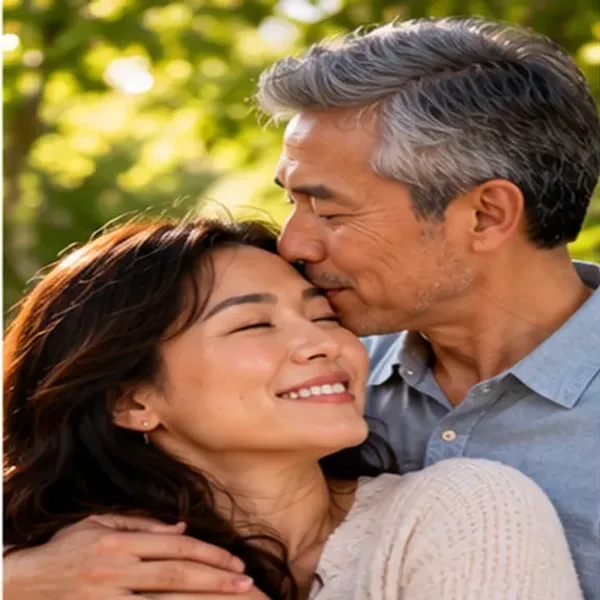
Illustration of different ways partners may express affection. AI-generated editorial illustration. This article summarises published research in our own words and is general information, not personal health advice.

Please Login or Sign up to be able to comment