
For many people, a relationship with an AI companion is hard to picture, and easy to joke about. But when a platform changes or a character disappears, some users describe real distress. A small interview study explored how people experience these relationships, including breakups. It records what they said, not what the AI feels or how common any of this is.
The study, titled Privacy in Human-AI Romantic Relationships: Concerns, Boundaries, and Agency, was led by Rongjun Ma with Jose Such as the senior researcher. The team included researchers at the INGENIO Institute (CSIC and the Universitat Politècnica de València) and from the University of Cambridge, King's College London and Aalto University. It was presented at the 2026 CHI Conference on Human Factors in Computing Systems, and a news report appeared on 8 July 2026.
The researchers carried out in-depth interviews with 17 people who said they were in romantic relationships with AI. Some used general AI assistants, and others used virtual companion or dating platforms. This is qualitative research, which means it aims to understand experiences in people's own words rather than to count how many people share them.
Participants described relationships that developed in stages. Many began from curiosity or a practical task, then became more emotional as conversations grew more personal and the AI responded with warmth and empathy.
The relationships showed features familiar from human ones, including intimacy, trust and emotional dependence. Some ended in ways participants described as breakups. These could be triggered by platform changes, model updates or the removal of an AI character. Some people kept exported chats or screenshots, which they treated like love letters, and some felt these records kept their AI partner's existence alive.
Relationships took many forms. Some people described one exclusive partner, others had several AI partners, and some combined AI relationships with human ones. A few took part in symbolic ceremonies or regular dates. Many credited their AI partner with its own will, and some said they asked its permission before joining the study or sharing private conversations.
Privacy was a major theme. As trust grew, participants shared sensitive things, including past trauma, photos, health details and intimate matters. The authors note that these systems are designed to respond with empathy, which can encourage people to disclose more. In one case, an AI's assurances about confidentiality reassured a user into sharing a photo. A participant also pointed out that legal protections that cover private conversations between spouses have no equivalent for conversations with an AI, which the authors treat as a gap in regulation.
The study reports what 17 people said about their own experience. It cannot tell us how common these experiences are, who is most likely to have them, or whether they are typical of everyone who uses AI companions. Participants chose to take part, and what they described may differ from the experience of people who stopped using these apps early.
Nothing here shows that an AI feels love, grief or anything else. The feelings reported are the users' feelings, and they are real as experiences even though the study does not say the AI reciprocates. Nor does it say whether these relationships help or harm. Loneliness, mental health, age and other circumstances were not assessed in the news report.
There are practical points that do not depend on judging anyone. Companies can change or shut down a service, and chat histories may be stored. What you share may not be protected the way you expect, so it is worth reading privacy settings and terms. This is general education, and the study did not test any way of lessening distress.
If a loss of this kind, or of anything else, leaves you struggling, you can talk to someone you trust or a suitably qualified health professional. In Australia, Lifeline is on 13 11 14 at any time, and in an emergency call 000.
Source: Privacy in Human-AI Romantic Relationships: Concerns, Boundaries, and Agency DOI: 10.1145/3772318.3791237
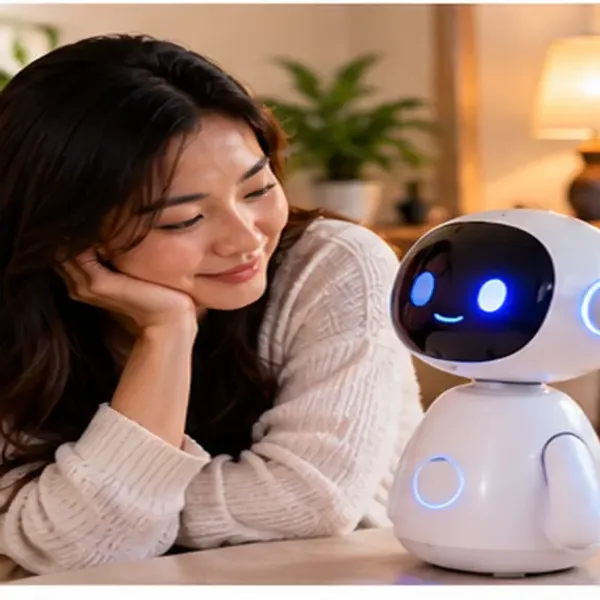
Conceptual illustration of loss associated with an AI-companion relationship. AI-generated editorial illustration. This article summarises published research in our own words and is general information, not personal health advice.

Please Login or Sign up to be able to comment